
How to Find Historic 1950s Vacation Rentals in Florida
Last Updated: November 4, 2026
Quick Summary
To find historic 1950s vacation rentals in Florida, verify the building's documented construction date rather than its decor, then confirm recent photos, restoration scope, and beach access. Restored mid-century beach cottages offer period character alongside modern comfort, but you should ask for bed and bathroom counts in writing before booking.
Florida has led the nation in vacation-home units across the last three census counts.
Ask whether the property has a lead-based paint disclosure and the EPA pamphlet for pre-1978 housing.
Confirm whether detectors are on every level and near sleeping areas, not just in a hallway.
For larger parties, reserve an entire property rather than a single unit to keep one gathering space.
A building dating to the 1950s with a 2021 interior remodel shows what genuine restoration looks like.
Table of Contents
Why 1950s Vacation Rentals in Florida Still Draw Travelers
The Postwar Building Boom That Shaped the Coast
What Old Florida Charm Actually Means for Your Stay
What to Look for in Historic 1950s Vacation Rentals Florida Oceanfront
Reading a Listing Before You Book
Historic 1950s Vacation Rentals Florida Beachfront: Matching the Property to Your Group
Historic 1950s Vacation Rentals Florida by Owner: What Changes When You Book Direct
The Historic Vacation Rental Safety Checklist Every Family Should Run
Restored Accommodation vs. Retro Styling: Telling the Difference
Search Historic Beachfront Villas in Cocoa Beach
Frequently Asked Questions
Why 1950s Vacation Rentals in Florida Still Draw Travelers
Florida has led the nation in vacation-home units across the last three census counts, according to the U.S. Census Bureau's Historical Census of Housing Tables, and a striking share of that stock dates to the postwar boom. For travelers hunting historic 1950s vacation rentals in Florida, that concentration of vacation housing matters.
At Canaveral Beachfront Villas Llc, we offer restored homes on a private 1.4-acre beachfront property in Cocoa Beach, and guests can enjoy direct beach access from their own deck. These buildings carry a specific kind of Florida story, and staying in one is a different experience from checking into a modern high-rise.
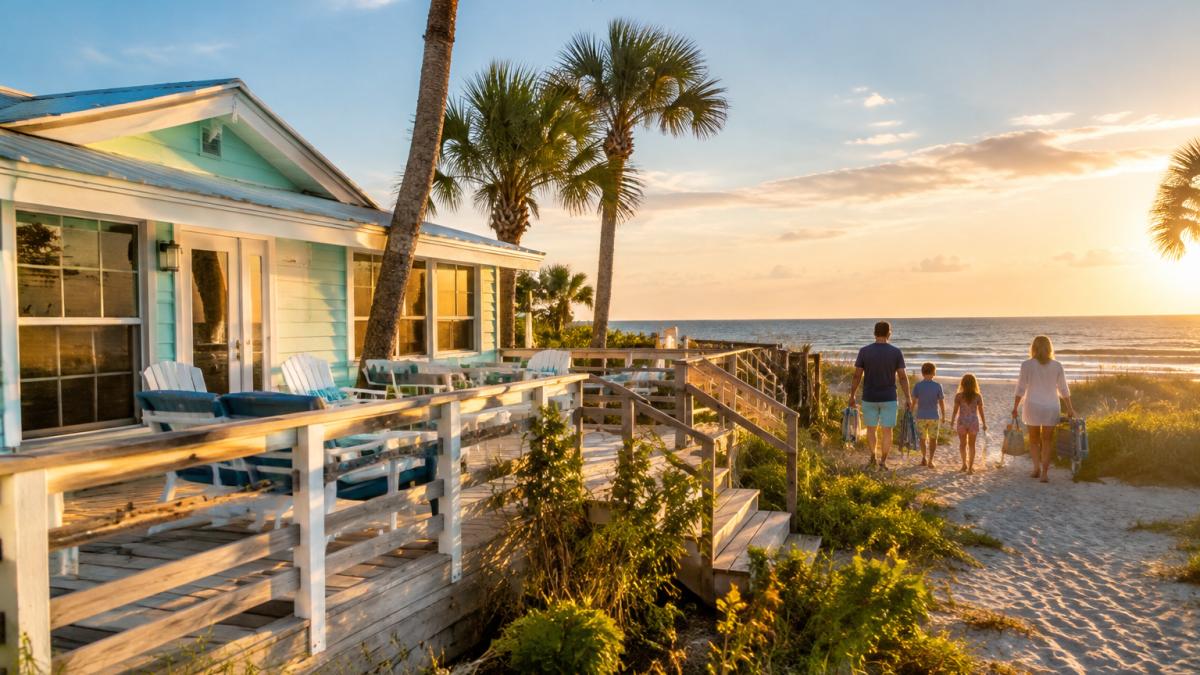
Family walking toward the ocean from a historic 1950s vacation rental in Florida with a pastel exterior and wood deck.
The Postwar Building Boom That Shaped the Coast
The decades after World War II remade the Florida coastline. A University of Florida study of single-family housing from 1945 to 1975 documents how architect-designed residences, suburban developments, and modest beach houses went up in a rush during those years. Many of those structures still stand.
What Old Florida Charm Actually Means for Your Stay
Old Florida charm is the low-rise, open-air, salt-and-sunlight character of mid-century coastal building: single-story plans, deep porches, jalousie windows, terrazzo floors, and a genuine walk-to-the-beach layout. Restored properties can offer period character alongside modern comfort.
What to Look for in Historic 1950s Vacation Rentals Florida Oceanfront
The single most important thing to verify is the building's actual construction date, not its decor. A 1950s oceanfront rental should come with a documented history, recent photographs, and clear disclosure of what was restored and when.
Here is the short version of what separates a real historic property from a retro-themed one:
Build date and history: Why It Matters: Confirms genuine mid-century origin; Red Flag: "Vintage style" with no dates.
Recent interior photos: Why It Matters: Shows current condition; Red Flag: Only staged or old shots.
Restoration scope: Why It Matters: Tells you what is original; Red Flag: Vague "fully updated" claims.
Beach access: Why It Matters: Defines the actual stay; Red Flag: "Near the beach" language.
Safety disclosures: Why It Matters: Protects families with kids; Red Flag: No mention of age of systems.
Reading a Listing Before You Book
Start with the year built. Then look for specifics: original floor plan, restored windows, updated electrical, and the distance from the door to the sand. A listing that names the decade but shows none of the details is usually selling a mood, not a building.
Historic 1950s Vacation Rentals Florida Beachfront: Matching the Property to Your Group
Group size decides which property type fits, but in a 1950s building the math works differently than it does in a modern rental. Mid-century beach cottages were often built for smaller households, so floor plans can differ from newer homes. Reading the floor plan, not just the bedroom count, helps match a property to your group.
Ask about the bathroom-to-bedroom ratio before booking, since it can matter a great deal for larger groups. Ask whether there is a second full bath, an outdoor shower, or a half bath.
Next, map the sleeping arrangements. If you are bringing a larger group, ask for the bed-by-bed configuration in writing rather than assuming a bedroom count translates to a headcount.
Outdoor space matters for gatherings. Confirm whether the deck is private to your unit or shared, and whether any yard is fenced if you have toddlers.
Watch out: a listing's stated capacity may count air mattresses and porch daybeds. Ask for the actual bed count and bathroom count in writing before you reserve.
For larger parties, the practical move is to reserve an entire property rather than a single unit, which lets a group spread across multiple cottages while keeping one gathering space. Our whole-property rentals and private events page covers reserving all the oceanfront homes for gatherings under fifty guests, and our three-bedroom oceanfront villa is the largest single unit if you want one roof for the whole group.
Historic 1950s Vacation Rentals Florida by Owner: What Changes When You Book Direct
For group trips, direct booking also opens options that platforms rarely show, such as reserving an entire property. Our whole-property rentals and private events page covers reserving all the oceanfront homes for gatherings under fifty guests. Watch out: confirm the cancellation terms and pet policy in writing before you pay, because direct bookings vary widely from one owner to the next.
The Historic Vacation Rental Safety Checklist Every Family Should Run
Older homes are safe when they have been properly maintained, but age means you should ask specific questions. Pre-1978 housing is subject to federal lead-based paint disclosure requirements, so ask whether the property has a lead-based paint disclosure and the EPA pamphlet "Protect Your Family from Lead in Your Home."
Run this checklist before you book:
Lead-based paint disclosure for pre-1978 construction, plus the EPA pamphlet
Working smoke and carbon monoxide detectors, ask when they were last tested
Stair rails, window guards, and outlet covers if young children are coming
Secured heavy furniture and anchored TVs in rooms kids will use
Pool or water safety rules, plus whether the pool is fenced and gated
Recent photos of the actual unit, not a sister property
Emergency contact reachable during the stay
Whether the property has a current short-term rental license if the local jurisdiction requires one
Two items on that list deserve more than a checkbox. Carbon monoxide is the one hazard that has changed most since the 1950s: older homes may have gas appliances, a gas water heater, or an attached garage, and a detector is the only reliable warning. Ask whether detectors are on every level and near sleeping areas, not just in a hallway. Pool safety is the other: Confirm the pool has a self-latching gate and that the owner can describe the barrier.
Watch out: a renovated property is not automatically a safe one for children. A cosmetic remodel can leave original windows without guards, original stair rails at a spacing that a toddler can slip through, and original electrical outlets without tamper resistance. Ask what was actually updated, and get it in writing rather than relying on the word "renovated."
Families who want the full detail can review our guide to whether 1950s vacation homes are safe for kids, which walks through all seven checks. The short version: ask, get it in writing, and treat the lead disclosure as a floor rather than a ceiling, it tells you what the owner knows, not everything you should ask.
Restored Accommodation vs. Retro Styling: Telling the Difference
Restored accommodation preserves original structure while updating systems. Retro styling focuses on decor.
The difference often shows up in details such as original flooring, period windows, and floor plans that match the decade. Our newly remodeled 1950s-built beachfront townhouse is a good example of what genuine restoration looks like, since the building dates to the 1950s and the interior was brought up to current standards in 2021.
Search Historic Beachfront Villas in Cocoa Beach
The demand is real and growing. The global vacation rental market is estimated at $109.4 billion in 2026, according to StayFi's vacation rental statistics, and historic properties hold a distinct place in it. One caution worth repeating: past rental results never promise future performance, as Hitchcock Properties' Florida Gulf Coast case studies note.
If you want to see actual restored options, compare historic beachfront rentals in Cocoa Beach with real costs and property details. For larger parties, our three-bedroom oceanfront villa sleeps a full group with private beach access.
Finding a 1950s beach home that is genuinely historic, genuinely safe, and genuinely comfortable takes more homework than booking a chain hotel. That is the gap Canaveral Beachfront Villas Llc was built to close. Our restored 1950s homes sit on a private 1.4-acre beachfront property with direct beach access and rocket launch views from your own deck, giving families and groups a unique setting by the sea. Search Canaveral Beachfront Villas Llc and reserve a piece of Old Florida for your next beach vacation.
Frequently Asked Questions
Where can you find historic 1950s vacation rentals in Florida?
Start with coastal communities that boomed after World War II. The U.S. Census Bureau's historical vacation-home tables show Florida leading the nation in vacation-home units across the last three decennial censuses, so the inventory is concentrated along the coast. Look for listings that name the build year, show period details in photos, and sit on a property with documented history. Cocoa Beach is one example, with restored 1950s homes on private beachfront acreage. Ask the owner for the construction date and any preservation records before you reserve.
What should a historic vacation rental safety checklist cover?
Run through five areas. Check smoke and carbon monoxide detectors on every level, confirm the age of the electrical panel and outlets, look for handrails on stairs and grab bars in bathrooms, ask about pool or beach access gates if you have small children, and confirm the owner carries current liability insurance. A historic vacation rental safety checklist should also cover window guards in upstairs bedrooms and whether the property has been inspected by the local fire authority. Ask for recent photos of each item, not just the living room.
What is the difference between a restored historic home and a 1950s-style rental?
A restored home keeps original structure, materials, and period character while updating systems like wiring, plumbing, and roofing. A 1950s-style rental is often a newer build decorated with retro furniture. The distinction matters for authenticity and for safety. Ask the owner directly whether the building dates to the 1950s and what was replaced versus preserved. The University of Florida's 2019 study of single-family housing from 1945 to 1975 documents how these postwar homes were built, which helps you ask better questions about what survived.
How do you verify that a historic rental has been properly maintained?
Request three things: recent dated photos of the systems (panel, water heater, roof), the most recent inspection or permit records, and guest reviews that mention condition rather than just location. Ask when the roof, HVAC, and wiring were last updated. A well-run historic property will answer without hesitation. If the owner cannot produce documentation, treat that as a signal. Booking direct with the owner often makes this conversation easier, since you are talking to the person who maintains the property rather than a call center.